There is a time of the season every year, often lasting for several weeks, when deciding what fly pattern to use becomes a little less obvious. The mayflies and caddis are all but over. The true stars of Summer, Hoppers, are many weeks away. Trout spotted feeding at or near the surface can be a challenge. Yet, at the same time, the menu choices, at least during the day, are somewhat limited. Early in my fly fishing obsession I ran into this quandary more times than not. Eventually, through observation, the tide began to turn.
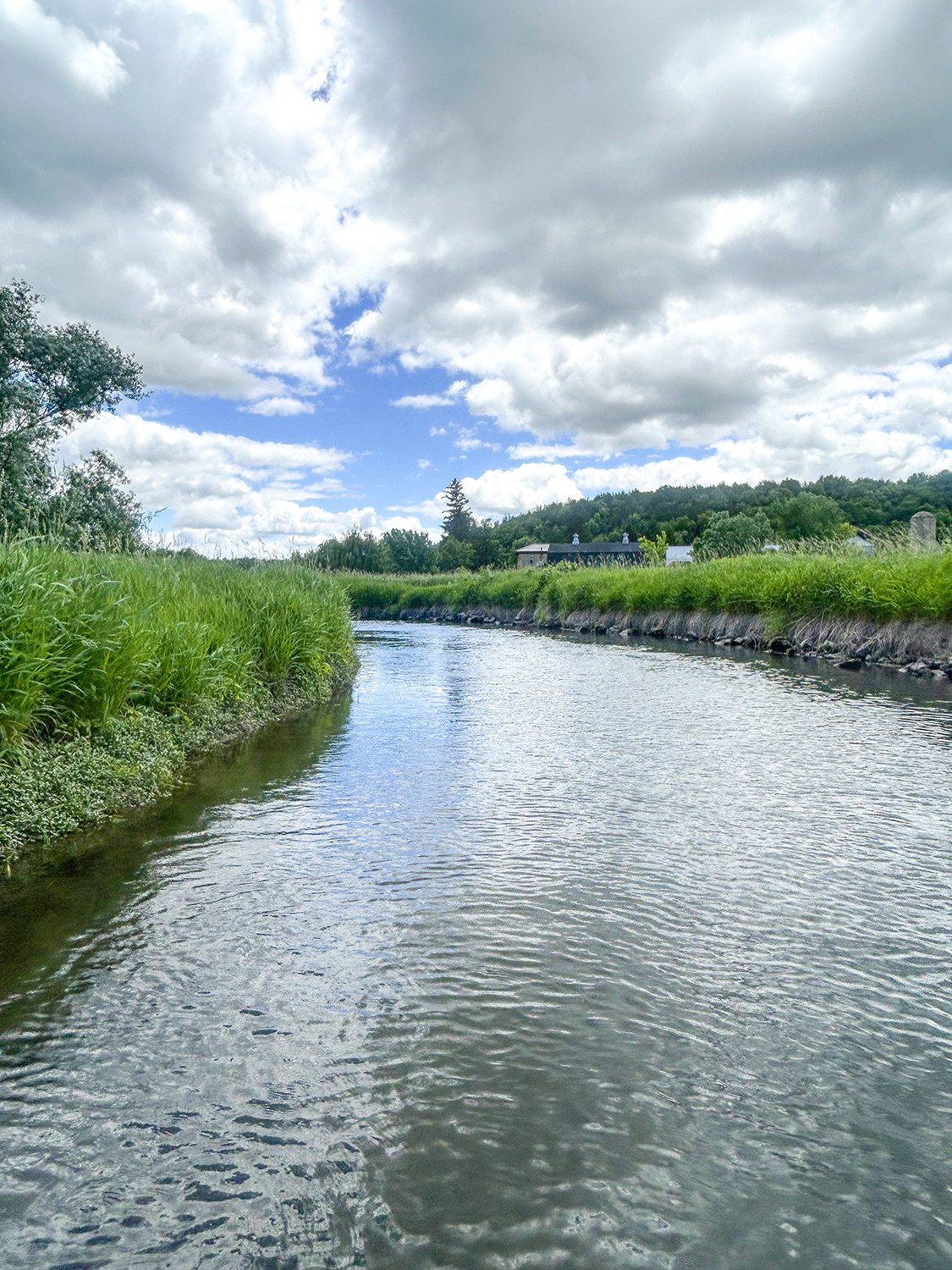
I remember well, some four decades later, the first time the power of observation got me out of such a quandary. I had walked into a stretch of water that saw few anglers by early Summer. It was a long, bush whacked hike far from any public access point. Upon arrival I noticed several fish feeding on or near the surface. At the top of my view point the stream bent to the left and a large Willow hung over the water. There, underneath the tree, was a steady feeding fish who gave the impression of perhaps being larger than all the rest.
At that point in my early days of fly fishing I carried but a few flies. A basic selection purchased at the local Shoe and Sporting Goods store. At that moment I couldn’t remember the names of those patterns. I was just happy to know which ones floated poorly and which ones sank. As I fished upstream I threw almost every fly I had and proceeded to put every fish down. By the time I reached that Willow it became obvious, I needed to take a break. Staring at that water, pondering if I should just pack it in, something caught my eye. There, in the surface film, was the clue I so desperately needed.
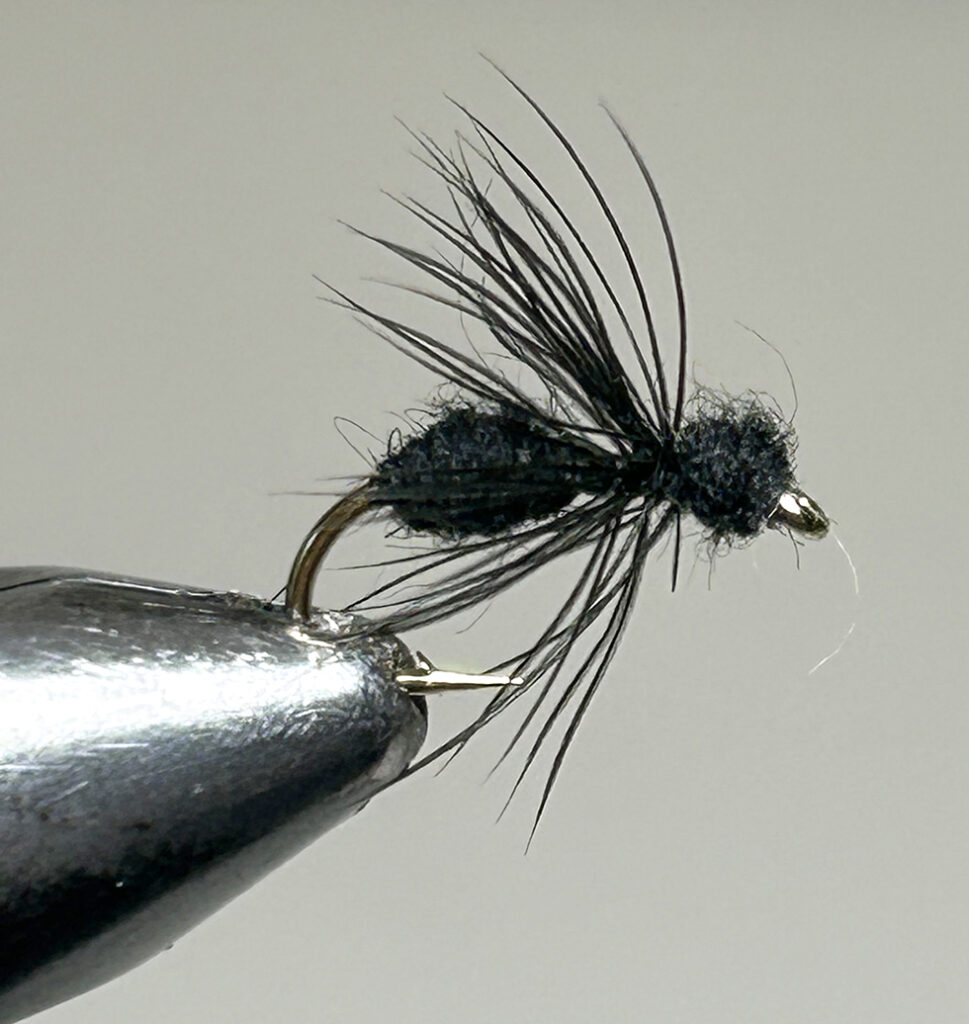
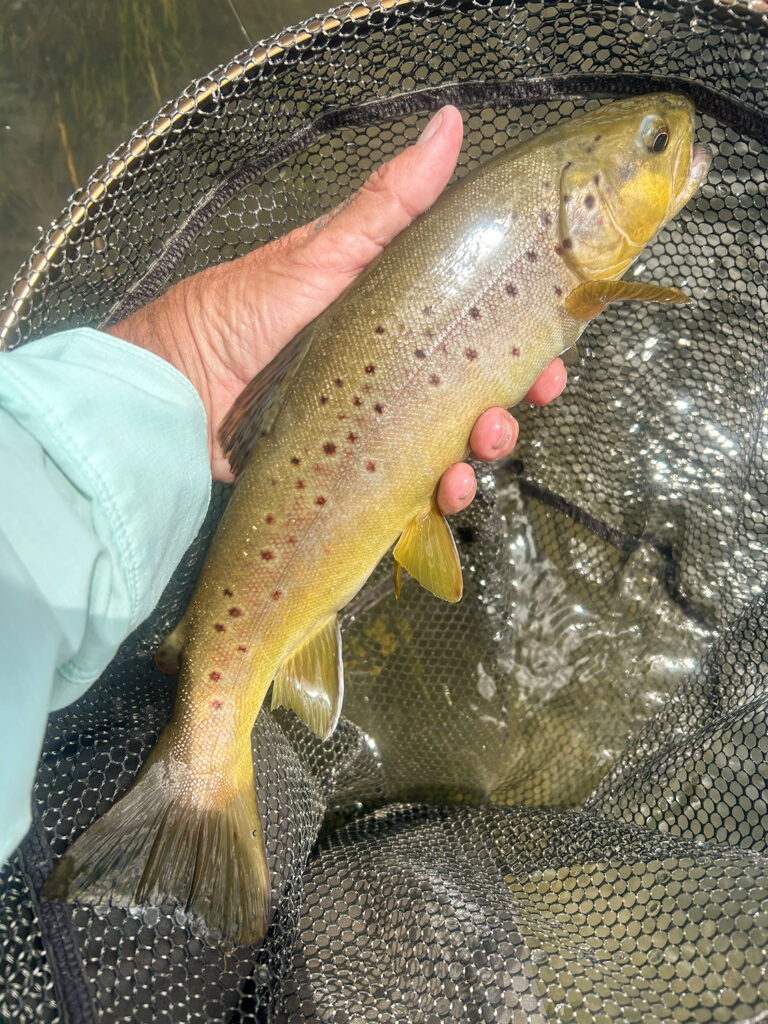
Not a mayfly, not a Caddis. Ants. Suddenly it clicked. They were being blown by the breeze, off the limbs and landing on the water. Much to the delight of that Brown trout waiting beneath the surface and probably to others who were lined up in the current seam downstream. Looking through what flies I had left I found the only black fly I had. With my cheap drug store finger nails clipper I quickly chewed away the wings and tail leaving just a black body and a few black hackles. It would have to do. It wasn’t on the first cast, or the second, but on the third my makeshift ant landed in the right place and that trout, all sixteen inches of it, rose up and ate.
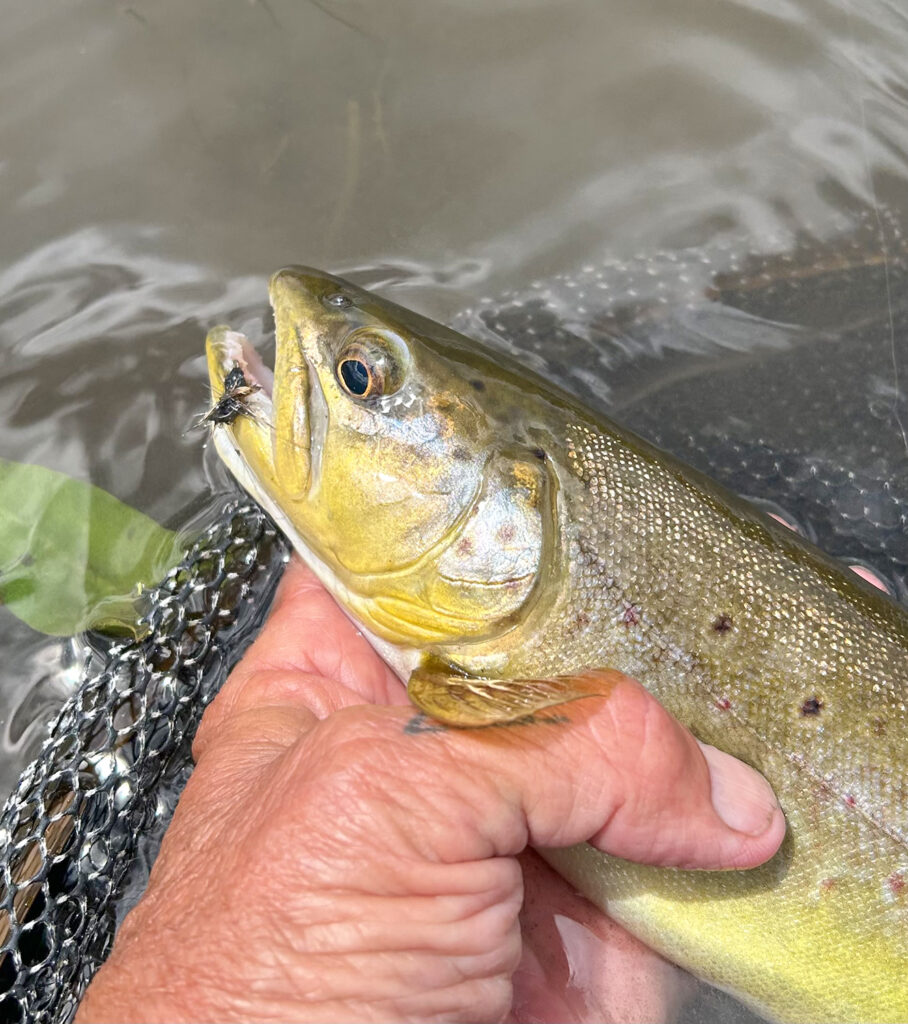
From that day forward I use small terrestrials to fill the void. That void that exists between the early Summer evening aquatic hatches and the late July afternoons of baby hoppers. To be honest, I enjoy this time of the season. There are still times when a small blue wing Olive or a tan Caddis will take fish for it seems those bugs are truly never completely gone. However, day in- day out, mid June to mid July, at least during the day, more often than not you will find an ant, wet or dry, or perhaps a beetle at the end of my tippet. That Willow tree, who provided food and shelter for the Brown trout that lived beneath it, is no longer there. But that long, slow bend is and it still produces fish forty five years later. I know. I was there today. They’re still eating ants.
Leave a Reply